The Scorecard: Measuring What Matters in Golf and Finance
In golf, the scorecard tells the story. Every stroke is recorded, every hole accounted for. But good golfers don’t just count their total; they track fairways hit, putts taken, and greens in regulation. These metrics rev
Golf, Money & Life · No. 6 · October 20, 2025
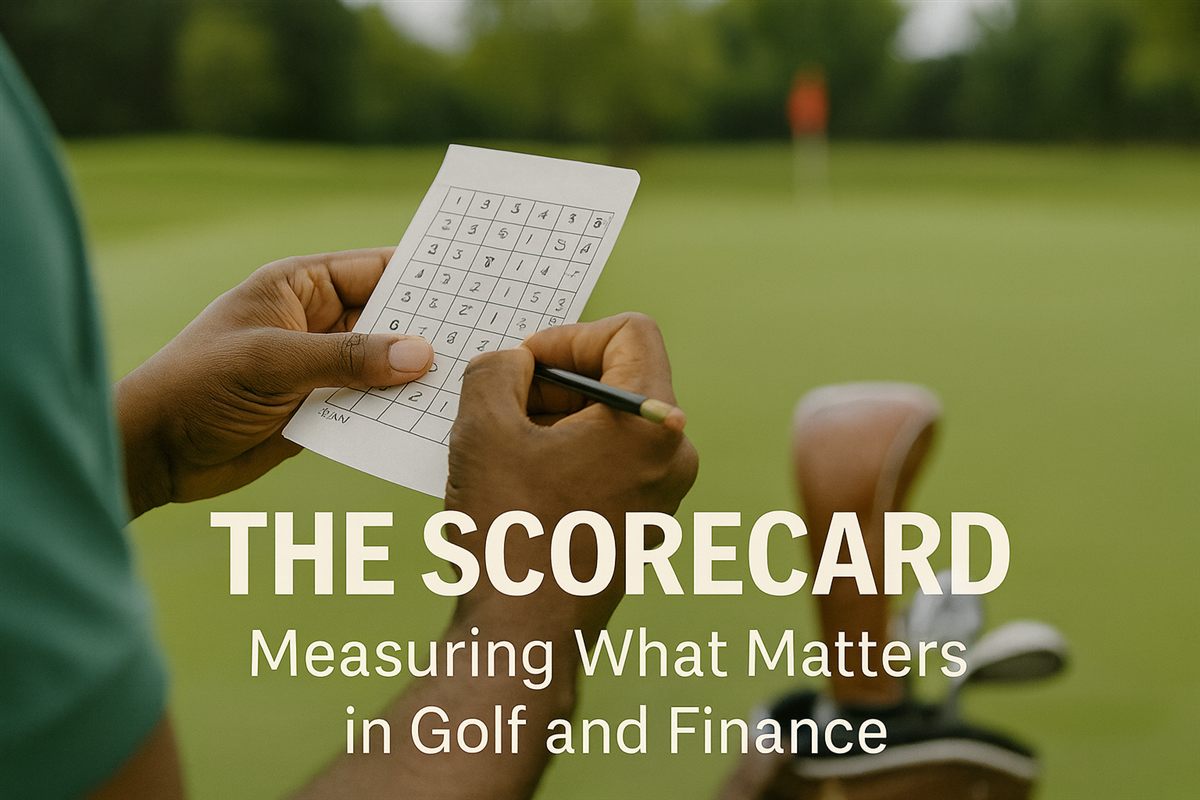
⛳ In golf, the scorecard tells the story. Every stroke is recorded, every hole accounted for. But good golfers don’t just count their total; they track fairways hit, putts taken, and greens in regulation. These metrics reveal where improvement is possible.
💰 In finance, your “scorecard” is your budget, statements, and progress toward goals. Success isn’t measured only by net worth, but also by the habits and benchmarks that build it.
Three Scorecard Lessons
1️⃣ Track the Right Numbers
Golfers know that lowering putts per round can make a huge difference. In money, the correct numbers may be your savings rate, debt-to-income ratio, or emergency fund size. Don’t just look at the big total — measure what drives improvement.
2️⃣ Learn from Each Round
A tough round can expose weaknesses. Similarly, a difficult financial season reveals where your plan may be vulnerable. Reflection turns setbacks into strategies.
3️⃣ Benchmark Progress, Not Perfection
A golfer aiming to break 90 celebrates hitting 92 — because it’s progress. In money, celebrate milestones like paying off a credit card, hitting your first $100k saved, or sticking to your budget for six months.
The Takeaway
Golf reminds us that improvement comes from tracking the correct stats, not obsessing over perfection. In finance, measuring what matters — and learning from each round — keeps you on the fairway toward long-term success.
📖 This is part of my continuing series ahead of What Golf Can Teach You About Financial Planning (publishing late September 2025).
General information only, not personal financial advice.